
There are three possibilities for recycling failures:
The first type is nozzle blockage: if the nozzle blockage causes it, we need to clean the nozzle.
There is a cleaning nozzle in our guide, and we click on it

Then we’ll start cleaning at


Then at this point, we take the cleaning kettle: fill it with cleaning solution, and we spray the cleaning solution in the middle of the nozzle, lasting for about 2 minutes

If our nozzle is very clogged, we can wait until we finish cleaning the nozzle, and then we can clean the nozzle again. You can clean it a few more times until the ink line reaches the correct position in our recycling tank when we start the machine. And then this is the first type.
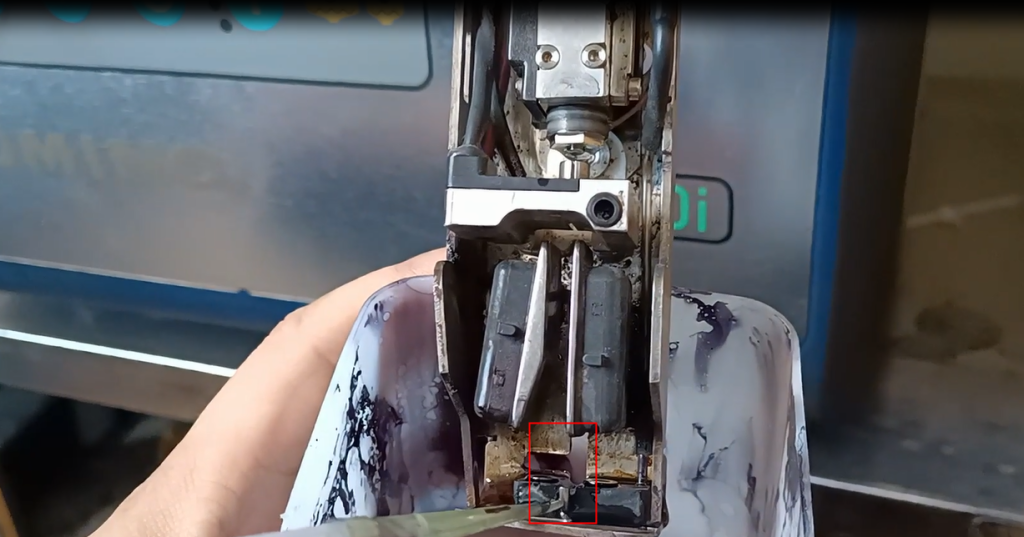
The first type is that the ink line offset caused by nozzle blockage does not enter the recycling tank and reports a recycling fault.
Another way is to say that our screws are loose, external impact force, impact nozzle, or nozzle falling to the ground, etc; Then it caused our screw to loosen, causing the nozzle to tilt and shift on this side.
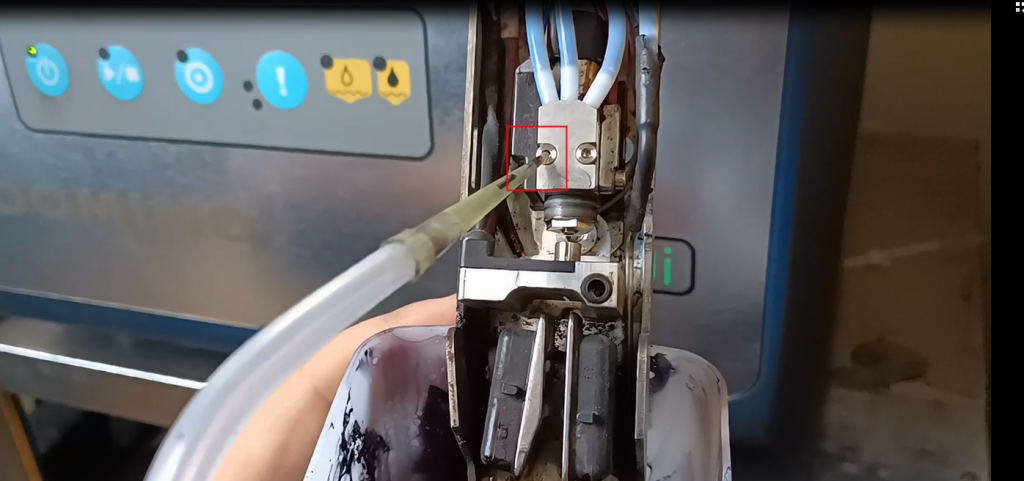
Then it causes the ink line to not enter the recycling tank, which requires us to adjust the position of the ink line.
We mean that the A+series or Domino A series/A+series are the same.
Then we adjust this fixing screw

We can loosen it, and after loosening it, if it’s left or right, we’ll adjust it here, and if it’s left or right, we’ll adjust it here

If it’s tilted back and forth, we’ll adjust it to the back

Then adjust it to the correct position in the recycling tank, this position

This is the second scenario.
The third scenario is that the ink line enters the recycling tank and it does not recycle. Failure to recycle indicates that our recycling pipeline is blocked. This situation is more complex. Firstly, let’s make a simple judgment. If the blockage is not very severe, we can soak the ink or our recycling tank in our solvent. That means our solvent needs to be soaked into the recycling tank.
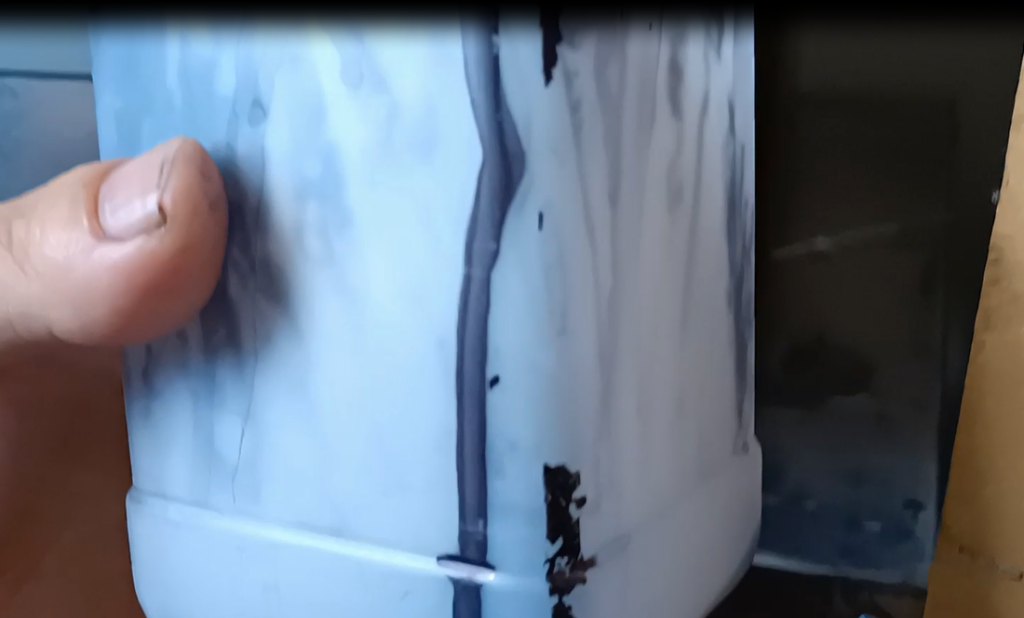
Then perform our internal operation: fill in our ink
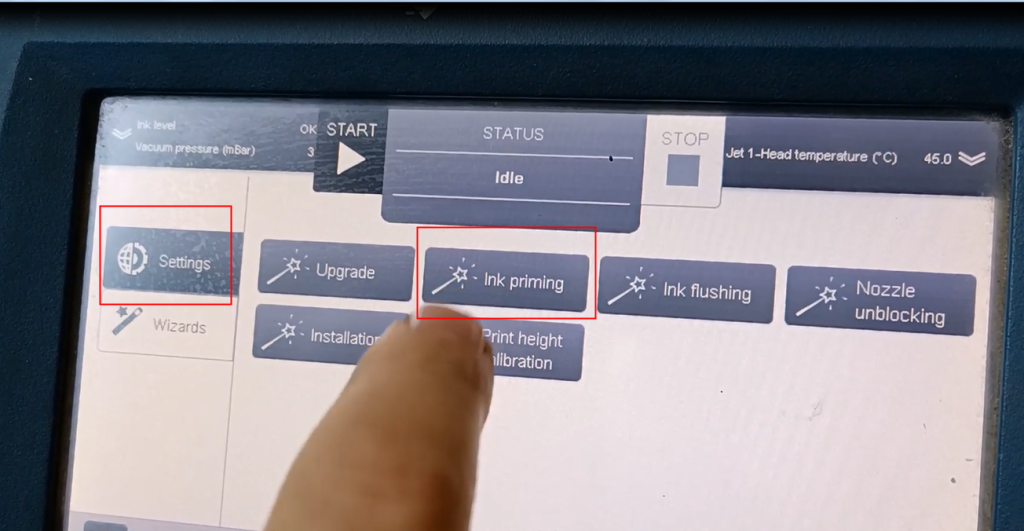
At this point, it will have a negative pressure for recycling, which will absorb our solvent. There is a high chance of cleaning the recycling tank at this time. This situation applies to blocked recycling tanks, which can be used in situations where the blockage is not as severe or slightly blocked.