Videojet Continuous Inkjet (CIJ) Industry Applications Guide
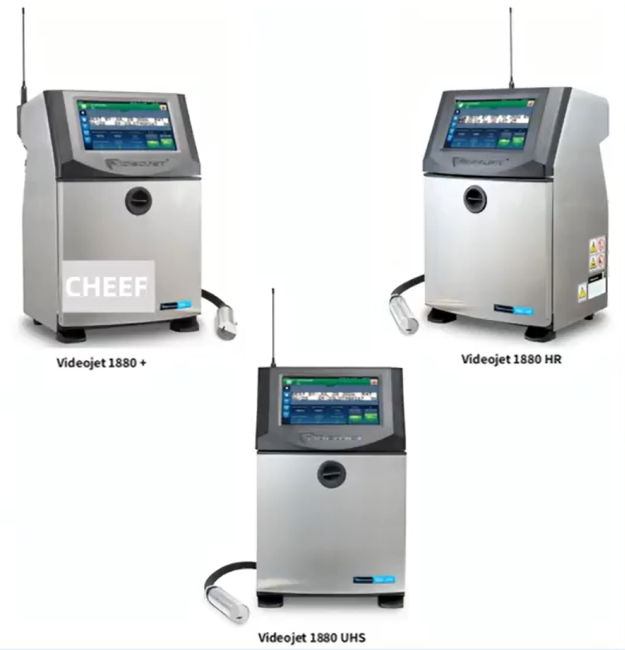
Continuous Inkjet (CIJ) printers provide highly adaptable tracking on processing lines. By combining variable, high-speed fluid dynamics with specific ink solvents, a single CIJ system can mark varied materials on the same production line.
Here is a breakdown of how small-character CIJ machines are applied across major consumer and industrial sectors.
Food Industry & Primary Packaging
Food packaging lines require rapid dry times to prevent smudging during fast processing cycles. Codes must remain legible through humidity, cold storage, and handling.
Common Packaging Formats
- Pillow Packaging: Commonly used for individual snacks, candies, and bakery items. Inks must bond tightly to thin, flexible polypropylene films.
- Flexible Packaging Bags: Used for frozen goods, stand-up pouches, and produce bags. Requires flexible ink resins that bend without cracking.
- Paper Boards & Structural Cartons: Porous cellulose materials that absorb ink quickly, allowing for high-speed alphanumeric batch coding and expiration dating.
- Specialized/Substrate-Specific Packaging: Includes metalized foils and wax-coated containers that require aggressive solvent bases to secure the code.

Beverage Industry & High-Speed Bottling
Beverage manufacturing lines run at exceptionally high velocities and face environmental challenges like moisture, wash-downs, and surface condensation.
Substrate Applications
- Glass Bottles: Coding on the neck or shoulder of the bottle. Requires specialized inks that penetrate condensation films during cold-fill processes.
- Aluminum & Steel Cans: High-speed marking on the concave bottom of beverage cans, demanding precise drop trajectory control at fast line speeds.
- Plastic Bottles (PET/HDPE): Non-porous surfaces that require fast-drying, ketone-based or alcohol-based inks for clean adhesion.
- Corrugated Cartons & Outer Case Packaging: High-contrast marking on secondary transit cases for internal tracking and shipping logistics.
- Protective Shrink Films: Coding directly onto clear multi-pack bundle wraps without melting or burning through the thin plastic layers.
Medical, Pharmaceutical, & Personal Care
Coding in these sectors is strictly governed by anti-counterfeiting laws, serialization requirements, and batch tracking standards.
Sector Specifications
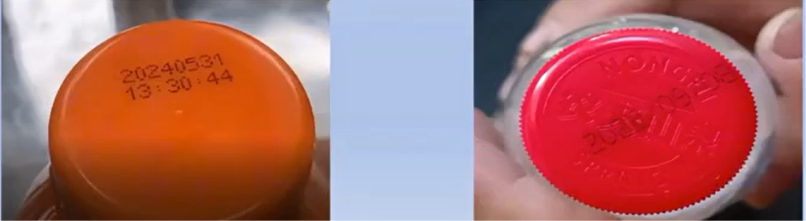
- Medical & Pharmaceutical Products: Traceability marks applied to blister packs, vial caps, and medicine boxes. Codes must be crisp and clear to ensure readability for automated vision systems.
- Personal Care Products & Cosmetics: Coding on curved lotion tubes, aerosol cans, and glass perfume bottles. These inks are formulated to resist smudging if exposed to product leaks, essential oils, or chemical ingredients.
Substrate and Fleet Allocation Matrix
| Manufacturing Industry | Target Material | Dominant Coding Location | Primary Environmental Challenge | Recommended Fleet Configuration |
| Food Processing | Flexible BOPP, Paperboard, Foil | Outer film flap, box side | Dust, high-temperature sealing | Videojet 1280 / 1580 Plus |
| Beverage & Canning | Condensing Glass, Aluminum | Can base, bottle neck | Ambient moisture, washdowns | Videojet 1580 UHS / 1880 UHS |
| Pharmaceutical | Tyvek, PVC Blisters, Paper | Flap closure, plastic rim | Sterile control, strict vision tracking | Videojet 1580 HR (High Res) |
| Personal Care | Coated Plastics, Glass, Tin | Container base, tube crimp | Chemical exposure, smooth finishes | Videojet 1240 / 1280 |
FAQ
How do CIJ printers maintain legibility on flexible pillow packaging when it deforms?
CIJ inks designed for flexible packaging contain specialized plasticizer resins. These ingredients allow the dry ink to flex and stretch with the thin plastic film, preventing the code from cracking, flaking, or rubbing off during transit.
Why do beverage lines require specialized “UHS” (Ultra High-Speed) hardware variant models?
On high-speed canning and bottling lines, standard ink droplets can suffer from aerodynamic drag and flight deviations. UHS models use optimized printhead fluid dynamics and high-frequency drop charging to keep codes crisp and properly aligned, even at top line speeds.
Can standard industrial inks be used on medical pharmaceutical blister packs?
No. Pharmaceutical coding typically requires specialized, low-migration or high-contrast inks that comply with health regulations. These formulations must also resist rubbing off if exposed to chemical sanitizers or alcohol wipes on the production floor.
Watch the Full Video Tutorial:
This article summarizes the key points from our original video. Watching the full tutorial provides a clearer understanding of the procedures, demonstrations, and practical maintenance tips.
▶ Watch the full video below.
📺 Subscribe to the Cheef YouTube Channel to receive future maintenance guides, troubleshooting tutorials, product demonstrations, and industry updates.
