Comprehensive Videojet CIJ Fleet Decision Matrix: Model and Ink Selection Engineering Guide
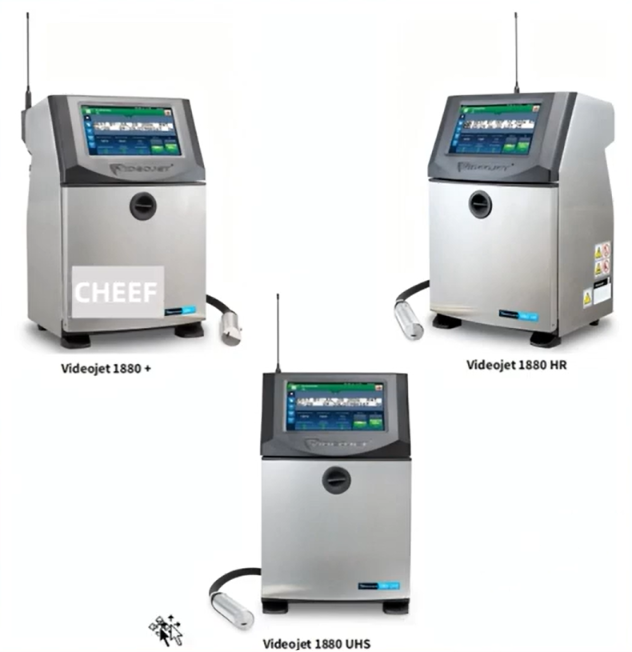
Selecting the appropriate Continuous Inkjet (CIJ) system requires matching the physical hardware constraints with the chemical compatibility of the target substrate and ink formulation. A mismatch can result in poor code adhesion, blocked printheads, or compliance failures.
This engineering guide outlines the complete selection logic and fluid chemistry classification for the modern Videojet SIMPLICITY™ and legacy industrial fleet.
Industrial Hardware Selection Logic
The selection process follows a precise technical flow chart based on regulatory compliance, pigment density, formatting limits, and line velocity.
[Start: Identify Line Marking Requirements]
│
Is Food-Grade Compliance Required?
├──► YES: Deploy Videojet 1620 FG
└──► NO
│
Is Heavy/Soft Pigmented Ink Needed?
├──► YES: Is it Soft Pigment (e.g., Yellow)?
│ ├──► YES: Deploy Videojet 1580 C
│ └──► NO: Deploy Videojet 1710 (Hard Pigment / White)
└──► NO
│
Is High-Resolution / Small Format Required?
├──► YES: Deploy Videojet 1580 HR
└──► NO
│
Is a Dual-Head [DH] Multiline Print Required?
├──► YES: Deploy Videojet 1610 DH
└──► NO
│
Is Ultra High-Speed Line Velocity Needed?
├──► YES: Deploy Videojet 1580 UHS / 1880 UHS
└──► NO: Standard Fleet Allocation
(Choose 1240, 1280, or 1580 Plus)
Technical Model Classifications
- Food-Grade Compliance (1620 FG): Required when printing directly onto consumable surfaces, such as candy coatings, prescription pills, or eggshells. The internal fluid loop is built to prevent chemical leaching and works strictly with consumer-safe, edible ink bases.
- Pigmented Mechanics (1580 C / 1710): Standard CIJ systems cannot handle heavy pigments because suspended solids settle out of solution during idle states, blocking the printhead.
- The 1580 C uses specialized fluid circulation for soft-pigment formulations (typically industrial yellow).
- The 1710 features a rugged mechanical agitation loop built for hard pigments (such as bright white titanium dioxide), ensuring the particulate remains suspended.
- High-Resolution Small Format (1580 HR): Equipped with a micro-nozzle orifice designed for precise micro-serialization, dense 2D data matrices, and crisp tracking text on confined components like circuit boards or medical devices.
- Dual-Head Multiline Configurations (1610 DH): Runs two distinct printhead umbilicals from a single processing chassis. This configuration allows a single unit to mark opposite sides of a product or stamp multiple packaging lines concurrently.
- Ultra High-Speed (1580 UHS / 1880 UHS): Optimized for ultra-fast lines, such as aluminum beverage canning or high-output bottling loops, where standard drop flight tracking breaks down.
- Standard Fleet Layout (1240 / 1280 / 1580 Plus): Allocated for standard production configurations where standard dye-based inks (MEK or alcohol bases) provide sufficient code clarity.
Ink Formulation Chemistry & Fleet Compatibility
Industrial ink bases are formulated with specific solvents, resins, and dyes to bind to varying surface energies. The table below lists the primary ink types, their substrate properties, and machine compatibility.
| Ink Code | Ink Color Category | Primary Substrates | Chemical Specialization | Compatible Machine Fleet |
| V4240 | Dye-Based Black | Glass, Metals, Rigid Plastics | General Waterproofing: Excellent baseline adhesion for cold-filled beverage lines and dairy applications. | 1240, 1280, 1580 Plus, 1580 UHS |
| V4250 | Dye-Based Black | Glass, Metal, Condensing Plastics | Condensation Resistance: Penetrates active moisture barriers on cold substrates without bleeding or scratching off. | 1240, 1280, 1580 Plus, 1580 UHS |
| V4228 | Soft-Pigment Dark Yellow | Glass, Dark Metals | High-Contrast Dark Surface Bond: Formulated to resist oil wipe-downs and water submersion. | 1580 C Only (Requires soft-pigmented fluid loop) |
| V4880 | Hard-Pigment White | Black Thermoplastics, Rubber, Steel | Maximum Contrast Titanium Dioxide: Heavy opacity formulation for clear codes on dark backgrounds. | 1710 Only (Requires high-agitation mechanical loop) |
| V4881 | Hard-Pigment Yellow | Extruded Pipes, Black Cables | Heavy Particulate Blend: Engineered to resist fading and migrating under UV exposure or high-heat manufacturing. | 1710 Only (Requires high-agitation mechanical loop) |
| V4269 | Ketone-Based Black | Smooth Glass, Dense Metals, Low-Energy Plastics | Fast Evaporation Solvent: Aggressive ketone carrier base for quick dry times on high-speed lines. | 1240, 1280, 1880, 1880 UHS |
Industry Application Standards
Beyond matching hardware to inks, specific manufacturing sectors must follow strict compliance frameworks to ensure tracking durability and safety.
1. Beverage, Dairy, & Frozen Goods
- Environmental Stress: High humidity, immediate cold storage temperature shifts, and active surface condensation.
- Ink Choice: V4250 or V4240. These formulations are designed to bond securely to wet glass, coated aluminum cans, and low-density polyethylene (LDPE) milk containers without smearing during packing.
2. Recyclable Container Loops
- Environmental Stress: Coded glass bottles must withstand distribution wear but require clean removal during washing loops at bottling plants.
- Ink Choice: Washable, caustic-soluble inks. These inks remain stable during consumer handling but dissolve completely when washed in hot, alkaline baths, allowing the bottle to be reused cleanly.
3. Medical, Pharmaceuticals, & Personal Care
- Environmental Stress: Must survive chemical sterilization (such as autoclave heat or ethylene oxide gas exposure) without fading, and require absolute trace component accountability.
- Ink Choice: Non-toxic, high-adhesion formulations that resist alcohol wipe-downs and chemical migration across thin plastics.
4. Aerospace & Automotive Extrusions
- Environmental Stress: Exposure to high heat, lubricants, brake fluids, and prolonged outdoor UV exposure.
- Ink Choice: V4880 White or V4881 Yellow running on a Videojet 1710. These pigmented inks maintain their color on dark rubber hoses, steel chassis beams, and wire harnesses without bleeding or fading under harsh conditions.
Frequently Asked Questions (FAQ)
1. How do I choose the right Videojet CIJ printer for my production line?
Start by evaluating your application requirements, including line speed, substrate material, print size, regulatory compliance, and ink type. For example, food-grade applications may require the Videojet 1620 FG, while high-speed beverage lines benefit from UHS models and dark substrates often require pigmented ink systems like the 1710.
2. Can all Videojet CIJ printers use the same ink formulations?
No. Different Videojet models are designed for specific ink chemistries. Standard dye-based printers cannot reliably handle heavy pigmented inks, while models such as the Videojet 1710 and 1580 C feature specialized fluid systems for white or yellow pigmented inks.
3. What factors should I consider when selecting a CIJ ink?
Choose an ink based on your substrate, production environment, and durability requirements. Factors such as adhesion to plastics or metals, resistance to moisture, chemicals, UV exposure, heat, or condensation, and industry compliance should all be considered before selecting an ink formulation.
4. Why is matching the correct printer and ink combination important?
Using the correct printer and compatible ink ensures reliable print quality, strong adhesion, reduced maintenance, and longer equipment life. An incorrect combination can lead to clogged printheads, poor code durability, increased downtime, and higher operating costs.
Watch the Full Video Tutorial:
This article summarizes the key points from our original video. Watching the full tutorial provides a clearer understanding of the procedures, demonstrations, and practical maintenance tips.
▶ Watch the full video below.
📺 Subscribe to the Cheef YouTube Channel to receive future maintenance guides, troubleshooting tutorials, product demonstrations, and industry updates.
