
Integrating the CF-Z03 Series: High-Precision Inline Labeling for Flexible Film Packaging Systems
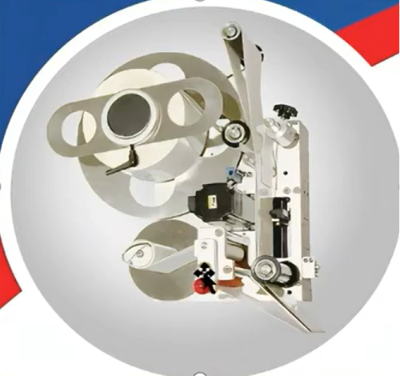
In modern Form-Fill-Seal (FFS) lines, applying pressure-sensitive labels directly to flexible packaging substrates introduces unique engineering hurdles. Unlike rigid plastic containers or corrugated boxes, soft packaging films are susceptible to structural wrinkling, localized web tension variations, and intermittent feed cycles. Attempting to apply labels downstream—after the bag or pouch has been formed, filled, and sealed—frequently yields skewed placements, air bubbles, and compromised seal surfaces due to the non-uniform contours of the enclosed product.
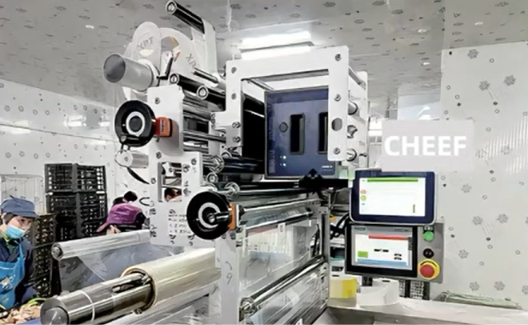
The engineered solution to this operational challenge is to execute labeling upstream while the packaging material exists as a flat, continuous web roll. The CF-Z03 and CF-Z03P Intelligent Flexible Film Labeling Machine Series is purpose-built for direct integration onto pillow-type, horizontal form-fill-seal (HFFS), and vertical form-fill-seal (VFFS) machinery. By operating in perfect, real-time synchronization with the parent packaging system’s film-draw axis, the series ensures flat, high-speed, and secure label adhesion without expanding the packaging room’s physical footprint.
Technical Architecture and Web Velocity Synchronization
The fundamental design advantage of the CF-Z03 series is its inline master-slave control architecture. Rather than relying on independent product sensors, the labeling system bridges directly into the parent packaging machine’s encoder feed or main PLC bus.
[Film Roll Unwind] —> [CF-Z03 Label Applicator] —> [Optional Coder] —> [Forming Tube/Sealing Jaws]
Absolute Dynamic Synchronization
Flexible films undergo continuous stop-and-go acceleration profiles on intermittent pillow-pack systems, or rapid constant velocity changes on continuous packaging lines. The CF-Z03 utilizes closed-loop servo control to match these variations instantly:
- The “Follow-to-Stop” Protocol: When the packaging system draws the film forward, the servo drive dispenses the label to match the exact linear velocity of the web substrate.
- Zero Position Displacement: When the film indexing mechanism stops to allow the horizontal sealing jaws to cut a completed bag, the applicator head pauses its feed line instantaneously. This dynamic interaction prevents label stretching, web tracking errors, or backing liner breakage.
Compact Chassis Design for Seamless OEM Integration
Floor space on a primary packaging line is highly constrained. The CF-Z03 series avoids the need for dedicated secondary conveyors by mounting directly to the structural framework of the host packaging machine’s unwind section. This design utilizes a space-saving cantilever mount that does not interfere with routine film web splicing or roll changes.
Series Variant Differentiation: CF-Z03 vs. CF-Z03P
The series splits into two primary configurations based on how variable serialization and date-coding are managed:
The CF-Z03 Standard Configuration (Labeling First, Printing Second)
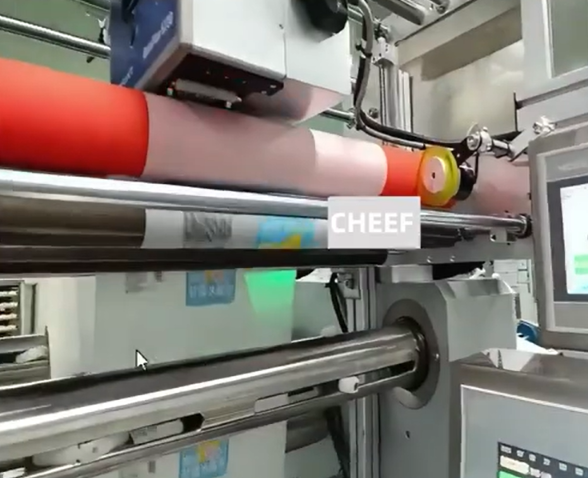
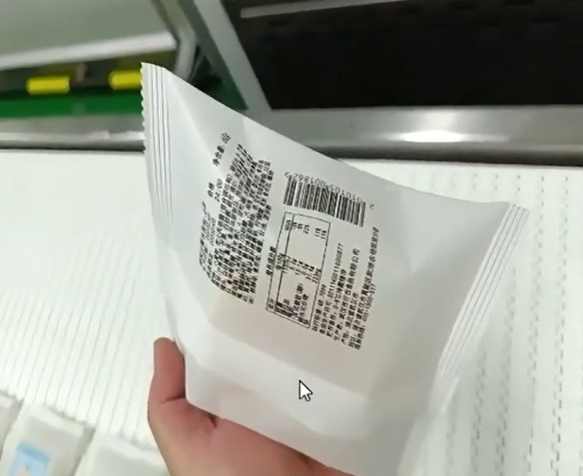
In the standard CF-Z03 setup, pre-cut labels (such as nutritional panels, promotional graphics, or brand identifiers) are applied directly onto the unspooling flat film web first. As the web continues its transit toward the forming tube, the newly adhered label passes beneath an integrated external inline coding unit. The coder then prints the required batch variables, expiration dates, or lot tracking markers directly onto the label surface. This layout provides reliable tracking and ensures crisp, smudged-free print finishes on specialized substrates.
The CF-Z03P Advanced Print & Apply Configuration
The CF-Z03P variant features an integrated thermal transfer ribbon (TTR) or direct thermal printing module nested directly within the applicator framework. This creates a compact, on-demand print-and-apply environment:
- The system receives real-time serialization or variable data from a central ERP or product database.
- The internal print engine renders the high-density print directly onto blank label stock.
- The label is instantly stripped from its backing paper and applied to the moving film web in a single mechanical motion.
This configuration is ideal for operations running highly customized batches, localized market variables, or randomized serialization tracking data where maintaining large stocks of pre-printed labels is inefficient.
Multi-Head Scalability for Advanced Packaging Layouts
To meet complex secondary packaging regulations, both the CF-Z03 and CF-Z03P can be scaled into multi-head systems (including dual-head and three-head arrays) operating on a unified control network.
- Dual-Head Front & Back Applications: Allows for the simultaneous application of a high-finish brand label and a distinct informational/regulatory label on opposite zones of the continuous film web.
- Multi-Label Hybrid Layouts: Integrates combinations of pre-printed promotional stickers and dynamic, real-time tracking labels onto the same pouch matrix, maximizing packaging versatility in high-throughput environments.
Technical Specifications and Operational Limits
| Parameter | Performance Baseline | Industrial Significance |
| Drive Architecture | Multi-Axis Closed-Loop Servo | Ensures immediate adjustment to film speed changes; avoids label slippage. |
| System Orientation | Inline Structural Integration | Mounts directly inside parent machine frame; saves factory floor space. |
| Substrate Compatibility | PE, PP, PET, Aluminum Foil, Laminates | Applies reliably onto diverse flexible polymer and composite barrier structures. |
| Labeling Precision | $\pm 1.0\text{ mm}$ (dependent on web tension) | Retains tight alignment parameters across high-velocity draw cycles. |
| Scaling Flexibility | Single, Dual, or 3-Head Arrays | Modular heads can be added to support complex multi-label designs. |
| Coding Options | External Hot Stamp/TIJ or Integrated TTR | Flexible data rendering tailored to production volume and durability needs. |
Proactive Maintenance and Operational Troubleshooting
Because inline equipment operates directly inside the primary packaging loop, any component failure can stop the entire form-fill-seal line. Implementing rigorous maintenance procedures is critical to ensuring consistent line availability.
Preventive Maintenance Routine
- Clean the Mechanical Peeler Bars: Adhesive bleed from label rolls can accumulate on the edge of the dispensing peeler plate. Clean this surface daily with a lint-free cloth and a specialized adhesive solvent. Any buildup here increases drag, which can cause label tearing or placement drift.
- Monitor Web Tension Alignment: Ensure that the film web guides on the packaging machine do not induce side-to-side drift across the applicator head. Misalignment will cause the label to sit outside its target zone.
- Calibrate the Core Tensioner: Check the friction lining or magnetic brake on the label roll unwind spindle weekly to ensure consistent web tension as the label roll diameter shrinks from 300 mm down to the core.
Troubleshooting Field Issues
- Symptom: Blistering or Air Bubbles Beneath Applied Labels
- Root Cause: The dispensing speed of the applicator does not match the linear velocity of the packaging film, or the wipe-down brush/roller tension is low.
- Correction: Re-verify the encoder pulse calibration ratio within the HMI interface. Ensure that the soft-density wipe-down roller or static brush applies uniform pressure across the film web to smooth out the label during application.
- Symptom: Consistent Label Placement Creep (Positional Drift)
- Root Cause: Slippage or lag in the master-slave feedback loop, or dust covering the registration mark photoelectric eye.
- Correction: Clean the registration sensor lens with dry compressed air. Check that the synchronization cables linking the labeling controller to the FFS main drive encoder are fully shielded and free from high-voltage electromagnetic interference (EMI).
- Symptom: Backing Paper Snap During High-Speed Acceleration
- Root Cause: The acceleration curve setting on the applicator’s servo motor is configured too aggressively for lightweight paper liners.
- Correction: Smooth out the acceleration profile in the servo drive parameters. Verify that the label gap sensor is not misinterpreting translucent backing liners, which can cause double-feeding and excessive web strain.
Frequently Asked Questions (FAQ)
1. Can the CF-Z03 handle ultra-thin stretchable polyethylene (PE) packaging films?
Yes. Because the system uses highly responsive closed-loop servo motors, it syncs directly with the film’s movement without applying excessive pulling force. This delicate handling prevents thin, stretchable PE films from distorting or warping during label application.
2. Is it possible to retrofit the CF-Z03 onto an existing pillow-pack machine?
Absolutely. The compact, cantilevered design of the main module is engineered for easy retrofitting. It can be installed onto the back unwind rack of most standard horizontal or vertical form-fill-seal systems without requiring major structural changes to the parent machine.
3. What is the main advantage of applying labels before the film reaches the forming tube?
Applying labels while the film is flat ensures complete, even contact across the entire surface. This eliminates the air pockets, wrinkles, and misalignment that often occur when trying to label irregular, already filled pouches or bags later down the line.
4. How does the system handle rapid print changes on the CF-Z03P variant?
The integrated print engine connects directly to standard industrial network interfaces. This allows it to update variable data fields—such as barcodes or lot codes—on the fly from automated database triggers, making it easy to manage mixed-product production runs without stopping the line.
Watch the Full Video Tutorial:
This article summarizes the key points from our original video. Watching the full tutorial provides a clearer understanding of the procedures, demonstrations, and practical maintenance tips.
▶ Watch the full video below.
📺 Subscribe to the Cheef YouTube Channel to receive future maintenance guides, troubleshooting tutorials, product demonstrations, and industry updates.
