
Selecting the Ideal Videojet CIJ Fleet: A Comprehensive Engineering Guide to Industrial Performance Tiers
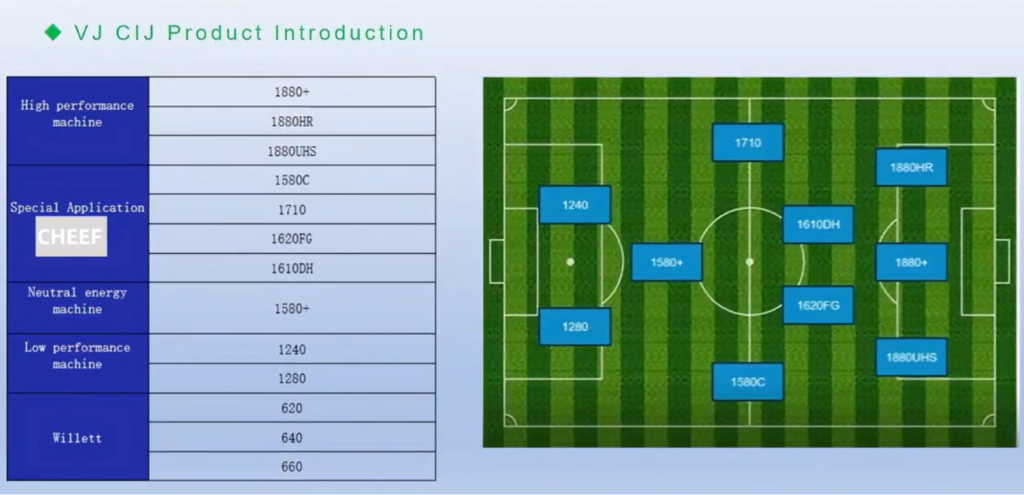
For manufacturing engineers, plant managers, and equipment distributors, selecting a Continuous Inkjet (CIJ) system is a critical choice that directly impacts line uptime, consumable costs, and total cost of ownership (TCO). Videojet’s extensive CIJ portfolio addresses varying line speeds, environmental demands, and ink requirements across distinct industrial applications.
To help facilities select the right system for their production environment, this breakdown categorizes the Videojet fleet into High-Performance, Specialized Application, Medium-Performance, and Entry-Level Cost-Effective segments.
The Videojet Product Tier Matrix
1. High-Performance Models (Maximum Speed & Precision)
Engineered for 24/7 continuous production loops, these systems feature advanced predictive diagnostics, automated printhead management, and wide integration options.
- Videojet 1880 / 1880 Plus: The flagship baseline for smart manufacturing lines. These models use advanced code-assurance software and predictive sensors to alert maintenance teams about ink alerts or nozzle clogs before a line stop occurs.
- Videojet 1880 HR (High Resolution): Equipped with a micro-nozzle (typically 40–50 microns) and specialized high-frequency piezo modulation. It is designed to print micro-serialization characters and dense 2D data matrix tracking codes on highly confined spaces, such as electronics, medical vials, and automotive components.
- Videojet 1880 UHS (Ultra High Speed): Optimized for high-velocity lines like soft drink canning, bottling, or cable extrusion. It uses a refined hydraulic loop to maintain crisp, legible character tracking at line velocities exceeding several hundred meters per minute.
2. Specialized Application Models (Pigmented & Food-Grade Fluids)
Standard CIJ printers struggle with heavy, suspended particulate pigments or strict consumer health regulations. These specialized platforms are designed to address these specific fluid dynamic requirements:
- Videojet 1710: Features a specialized mechanical agitation fluid loop built to handle heavy pigmented white ink. It keeps dense titanium dioxide pigments continuously suspended in the solvent matrix, preventing settling and ensuring bright, high-contrast marks on dark substrates like black plastic pipes, rubber conduits, and automotive hoses.
- Videojet 1580 C: Engineered primarily for pigmented yellow ink and vibrant soft-pigmented applications, balancing high contrast with automated fluid maintenance on dark packaging faces.
- Videojet 1620 HG / 1610 DH: Optimized for high-grade food packing and egg grading. The 1610 DH (Dual Head) features two independent printhead extensions driven by a single processing cabinet, allowing a single unit to mark opposite sides of a box or stamp multiple rows simultaneously.
3. Medium-Performance Tier (The Industry Workhorse)
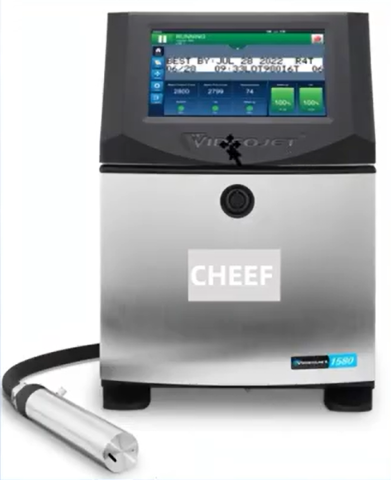
- Videojet 1580 Plus: A balanced choice for standard manufacturing packaging lines. It features a 10.4-inch tablet-style operator interface and utilizes the reliable 1000 Series printhead architecture. This tier balances high line reliability with accessible maintenance intervals for standard multi-shift environments.
4. Entry-Level & Cost-Effective Tiers
For operations with lower baseline line speeds or intermittent shift profiles, these models offer reliable marking without the premium cost of high-speed diagnostic systems:
- Videojet 1240 & 1280: Standard entry models featuring a compact, space-saving cabinet. The 1240 uses an 8.0-inch operational screen, while the 1280 upgrades to the standard 10.4-inch tablet interface. Both models utilize a simplified, user-replaceable service module that bundles core filters and fluid management blocks into a single piece.
- Willet Series (Willet 620, 640, 660): A cost-effective sister brand designed for baseline, high-reliability low-throughput environments. It focuses strictly on core coding functions, offering standard operation with minimal secondary software options to deliver a low cost per code.
Fleet Specification and Performance Comparison
| Operational Feature | High Performance (1880 Series / 1580C) | Medium Performance (1580 Plus) | Entry Level (1240 / 1280 / Willet) |
| HMI Screen Size | 10.4″ Tablet Style Interface | 10.4″ Tablet Style Interface | 8.0″ (1240) / 10.4″ (1280) |
| Print Head Platform | Premium Auto-Flushing Engine | 1000 Series Core Layout | Simplified Modular Head Assembly |
| Fluid Diagnostics | Advanced Predictive Ink Analytics | Standard Viscosity Monitoring | Baseline Electronic Viscosity Loops |
| Service Design | Modular Independent Subcomponents | User-replaceable Service Cartridge | Single-block Integrated Service Module |
| Pigment Handling | Yes (Dedicated 1710/1580C mechanical loops) | No (Dye-based formulations only) | No (Standard dye-based inks only) |
Engineering Design Advantages of Modern Platforms
When upgrading from legacy coding systems to current generations, plant engineers gain several key design benefits:
User-Replaceable Core Service Modules
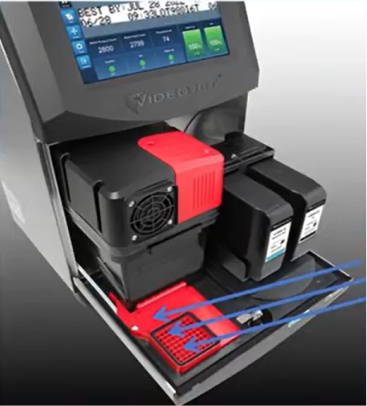
Older CIJ systems required a field service technician to rebuild the internal hydraulics when filters saturated. Modern tiers feature integrated service modules that house the main filter blocks, return vacuum traps, and pressure seals inside a single drop-in enclosure. Plant operators can replace this module in under ten minutes during scheduled downtime, reducing maintenance labor and preventing contamination.
Intelligent Cartridge Delivery Systems
To prevent chemical mixing mistakes on the factory floor, current ink and make-up solvent inputs use custom-keyed, sealed cartridge designs. This design offers several advantages:
- Mistake-Proof Insertion: An operator cannot accidentally insert a yellow pigmented ink cartridge into a white pigmented system.
- Fume Containment: The needle-vent design punctures the cartridge septum only inside the machine, keeping harmful solvent fumes out of the plant air.
- Complete Drainage: Fluid management paths use vacuum draw to drain the bottle completely, eliminating fluid waste.
Maintenance Protocols and Troubleshooting Guidelines
To maintain consistent print quality and maximize the service life of your fleet, maintenance teams should implement a structured preventative care schedule.
Preventative Maintenance Checklist
- Printhead Cleanliness (Shift Baseline): Spray the 1000 Series printhead faceplate with dedicated wash solvent at the end of each production shift. Ensure the charging tunnel and high-voltage deflection plates are clear of ink mist or drying splatters.
- Verify Air Filter Intakes: Clean or replace the cabinet air filters monthly. Saturated filters cause heat to build up inside the enclosure, which can stress the EHT high-voltage transformer and the main processing board.
- Perform Core Inspections: Monitor the remaining life percentage of the internal service module via the touchscreen dashboard. Order replacement modules before the runtime counter reaches zero to prevent automatic safety lockouts.
Troubleshooting Fleet Anomalies
- Symptom: Ink Stream Out-of-Gutter Fault (Automatic Line Interlock)
- Root Cause: Particulate contamination in the nozzle orifice causing the ink stream to shoot sideways, missing the return vacuum gutter.
- Remedy: Run the machine’s automated nozzle back-flush cycle from the HMI screen. If the blockage persists, remove the nozzle plate and clean it in an ultrasonic bath filled with clean wash solvent for 10 minutes.
- Symptom: Persistent EHT Arcing Trips on Pigmented Printers (Model 1710/1580C)
- Root Cause: Dense pigment residue accumulating on the $7,000\text{V}$ deflection plates, creating a conductive bridge across the air gap.
- Remedy: Power down the printer. Wash the printhead deflection plates thoroughly with clean wash solvent, using a soft, non-abrasive brush if needed to dissolve pigment skin. Dry the printhead completely using oil-free, dry compressed air before turning the high-voltage circuit back on.
- Symptom: Faint Codes or Character Bleeding
- Root Cause: Incorrect solvent-to-ink ratio caused by an empty make-up fluid cartridge or a faulty viscosity sensor.
- Remedy: Check the diagnostic menu to verify current fluid viscosity levels. If the ink is overly concentrated, ensure the make-up cartridge is full and that the fluid delivery lines aren’t pinched or blocked.
Frequently Asked Questions (FAQ)
1. What makes the Videojet 1710 different from standard dye-based CIJ systems?
Standard dye-based printers use soluble ink compounds that dissolve completely in the solvent base. The Videojet 1710 features a specialized mechanical fluid loop with active agitation to handle heavy, suspended pigments like titanium dioxide. This prevents white ink pigments from settling and clogging the system, ensuring clear, high-contrast marks on dark surfaces.
2. Can a facility use third-party consumables in these systems?
While third-party consumables are physically available, they introduce operational risks. Modern platforms use microchips or RFID tags on cartridges to verify chemical compliance. Third-party fluids can cause incorrect viscosity tracking, increased nozzle clogging, and premature filter saturation, and their use may void OEM equipment warranties.
3. What is the operational benefit of a Dual-Head (DH) model like the 1610 DH?
A dual-head system drives two independent printhead extensions from a single control cabinet. This allows plant engineers to execute two unique coding operations simultaneously—such as marking both the individual container and its secondary cardboard box, or printing multi-line compliance data onto opposite faces of a product—without purchasing two separate printers.
4. How long do the integrated service modules typically last?
Service module life depends on your specific model tier, ink formulation, and factory environment. On workhorse platforms like the 1580 or 1280 series, these modules generally provide between 3,000 and 5,000 hours of continuous runtime before needing a replacement. Remaining service life can be tracked in real time via the system’s maintenance dashboard.
Watch the Full Video Tutorial:
This article summarizes the key points from our original video. Watching the full tutorial provides a clearer understanding of the procedures, demonstrations, and practical maintenance tips.
▶ Watch the full video below.
📺 Subscribe to the Cheef YouTube Channel to receive future maintenance guides, troubleshooting tutorials, product demonstrations, and industry updates.
