
Technical Guide to Intelligent Thermal Transfer Overprinting for Flexible Packaging
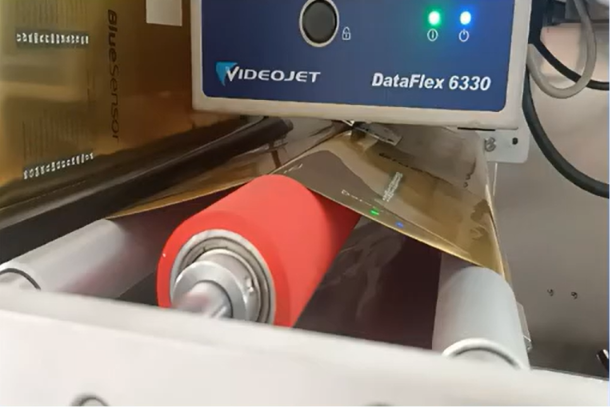
In modern automated packaging operations, data integrity and marking clarity are critical for regulatory compliance, traceability, and brand security. Traditional contact coding systems often struggle to maintain quality at high line speeds, causing unplanned downtime or leading to costly ribbon waste.
Thermal Transfer Overprinting (TTO) has emerged as the standard for coding onto flexible substrates. By analyzing advanced TTO systems, this article breaks down the engineering behind thermal transfer technology, compares resin-blend and pure resin consumables, and profiles leading industrial hardware configurations like the 6230, 6330, and 6530 series. For plant engineers, operations managers, and industrial distributors, choosing the right digital coding technology is a major lever for improving Overall Equipment Effectiveness (OEE).
The Physics of Thermal Transfer Overprinting (TTO)
The operational foundation of a TTO system relies on the precise synchronization of heat, pressure, and material movement. Unlike continuous inkjet (CIJ) or laser marking systems, TTO is a direct-contact digital technology designed specifically for thin, flexible packaging substrates.
During a print cycle, the machine’s thermal print head presses a multi-layered ribbon directly against the flexible packaging film. The print head features a linear array of microscopic heating elements that are digitally energized based on the desired marking pattern (such as real-time text, barcodes, or graphics).
When an element is heated, it reaches a precise thermal threshold that melts the ink on the ribbon. Under the mechanical downward pressure of the print head, this molten ink separates from its plastic base film and adheres to the target packaging substrate. The unheated points leave the ink completely intact on the ribbon, ensuring sharp edges and preventing any bleeding or overspray.
Ribbons and Substrates: Material Science and Engineering
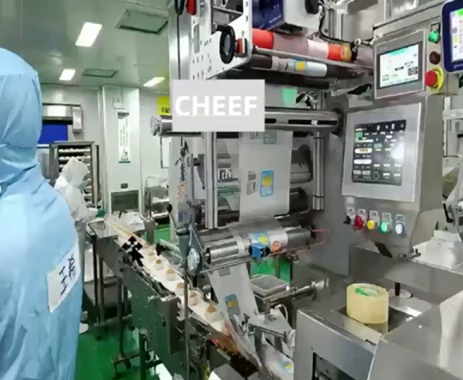
The performance of an intelligent coding system depends heavily on selecting a ribbon formulation that matches the target substrate and post-print environmental demands. TTO ribbons feature a highly specialized, multi-layered design engineered for rapid thermal transfer and print head protection.
Anatomy of a High-Performance TTO Ribbon
A standard industrial ribbon consists of multiple key layers, each serving a distinct function:
- The Protective Back Coating: This layer makes direct contact with the print head. It is formulated without abrasive agents to reduce friction and static electricity. It provides advanced heat management to prevent the ribbon from burning through under high temperatures.
- The PET Base Film: Acting as the structural foundation, this layer is typically only 4.5 micrometers thick. Despite its thin profile, it offers high tensile strength to withstand high-speed tension changes without snapping, while maintaining excellent thermal conductivity.
- The Functional Ink Layer: This layer contains the pigment bound in either a wax-resin blend or a pure resin matrix. It detaches cleanly when heated and cures almost instantly upon contacting the packaging substrate.
Industrial Consumables Comparison
Choosing between a wax-resin blend and a pure resin ribbon depends on your production speed, thermal exposure, and mechanical durability needs:
- Wax-Resin Blend (Mixed-Type Ribbons): These serve as the standard, universal choice for most lines. They support fast line speeds up to 1,000 mm/s (1 meter per second) and offer good smudge and scratch resistance. They can withstand temperatures up to 100 degrees Celsius and come in a wide variety of colors. They provide excellent print quality on standard flexible packaging films, papers, and pouches.
- Pure Resin Ribbons: Engineered for extreme durability, pure resin ribbons run at slower maximum speeds (around 250 mm/s) but provide unmatched smudge and scratch resistance. They easily withstand high temperatures from 180 degrees up to 250 degrees Celsius for specialized applications. Available in fewer colors, they deliver superior print quality on high-gloss films, synthetic labels, and medical packaging like Tyvek.
Continuous vs. Intermittent Operating Modes
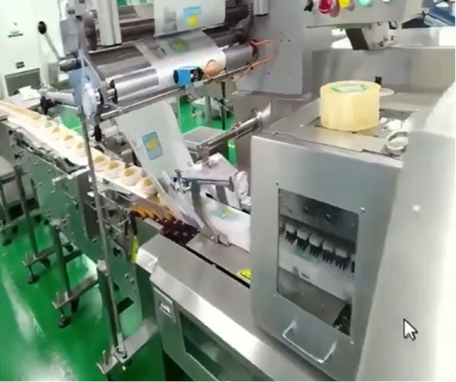
Industrial packaging lines generally run on one of two mechanical principles: continuous or intermittent movement. Advanced intelligent coding machines feature integrated functionality, allowing operators to switch between these two modes via software to match the host packaging line.
Continuous Printing Profile
In a continuous setup (often found on high-speed horizontal flow wrappers or banding lines), the packaging material moves constantly.
- Mechanism: The print head remains stationary along the horizontal axis, moving only up and down to engage the film.
- Synchronization: An encoder mounted on the impression roller tracks the exact velocity of the moving film in real time. When the start signal triggers, the print head drops down, executes the print matching the line speed, and lifts back up once complete.
Intermittent Printing Profile
In an intermittent setup (common on vertical form-fill-seal [VFFS] machines), the film advances, stops to allow sealing, and then advances again.
- Mechanism: The coding machine performs its print cycle during the brief pause when the film is stationary.
- Execution: The print head drops down onto a fixed rubber or pressure plate. An internal motor drive then moves the print head horizontally across the stationary packaging material to apply the code before lifting and resetting for the next cycle.
Hardware Profiles: Technical Specification Breakdown
The 6000-series TTO ecosystem provides scalable options tailored to different production volumes, throughput requirements, and text formats. Five main industrial configurations define the industry standard:
- 6230 (32mm Entry Unit): Operates at a print resolution of 200 dpi. It features a print area of 32mm x 47mm (intermittent) or 44mm x 32mm (continuous). It supports line speeds from 50 to 300 mm/s and handles a throughput of up to 150 packs per minute.
- 6330 (32mm Mid-Range): Steps up to a crisp 300 dpi print resolution. It offers a larger continuous print area of 32mm x 200mm (32mm x 75mm intermittent). It reaches high operational speeds up to 750 mm/s and handles line throughputs up to 250 packs per minute.
- 6330 (53mm Standard): Delivers 300 dpi resolution over a wider footprint. Its continuous print area expands to 53mm x 200mm (53mm x 75mm intermittent). It matches the 750 mm/s speed and 250 packs per minute throughput of its 32mm counterpart, making it perfect for multi-line text or barcode printing.
- 6530 (53mm High-Speed): Designed for maximum-throughput lines at 300 dpi. It covers a wide continuous print field of 53mm x 300mm (53mm x 75mm intermittent). It handles blazing line speeds from 10 to 800 mm/s, allowing it to process up to 700 packs per minute.
- 6530 (107mm Wide-Format): Built for large-scale graphics, ingredient tables, and tertiary packaging data at 300 dpi. It delivers a massive print field of 107mm x 300mm (107mm x 75mm intermittent) at speeds up to 600 mm/s, maxing out at 450 packs per minute.
Industrial Applications and System Integration
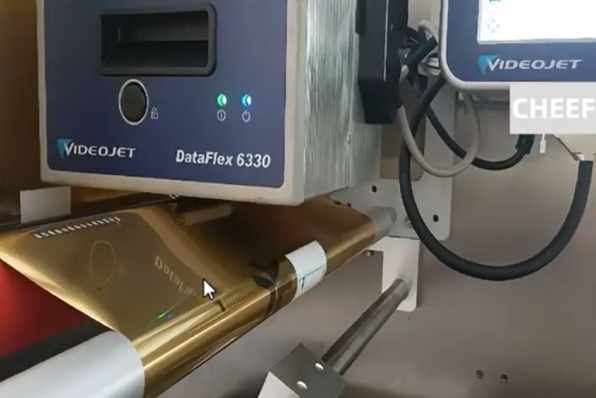
Intelligent TTO systems feature high-speed internal CPUs (such as an 800 MHz main frequency processor) that handle dynamic, real-time serialization. This capability makes them well-suited for several demanding industry sectors:
- Food and Beverage Packaging: TTO systems print multi-line ingredient lists, nutritional panels, allergen warnings, and traceability QR codes on pillow-pack wrappers, vertical pouches, and snack food bags.
- Pharmaceutical and Medical Devices: These systems excel at printing high-density GS1 DataMatrix codes, dynamic batch numbers, and exact expiration dates on strip packs, foil blisters, and Tyvek pouches, helping manufacturers comply with global serialization laws.
- Agricultural and Chemical Packing: For seed pouches or veterinary medicine foil bags, pure resin ribbon systems provide the chemical and abrasion resistance needed to keep tracking data legible through harsh distribution chains.
OEM Integration
These compact coding modules are designed to integrate directly into existing packaging systems. They easily mount onto standard brackets on vertical form-fill-seal (VFFS) units, horizontal flow wrappers, vacuum sealers, and standalone rewinding or slitting machines.
Maintenance and Troubleshooting for Plant Engineers
Industrial TTO coders are engineered for heavy-duty production environments, boasting an operational lifespan of 10 to 15 years. A key design advantage is their all-electric print head drive. Eliminating compressed air removes the risks of oil or moisture contamination from the plant air supply, resulting in more consistent print quality and lower maintenance needs.
Preventive Maintenance Protocol
To keep your system running smoothly and maximize print head life, follow this structured maintenance routine:
- Print Head Care: Clean the thermal print head elements regularly using lint-free swabs and 99% electronic-grade isopropyl alcohol. This removes accumulated ribbon dust and prevents hot spots that cause premature element failure.
- Impression Surface Inspection: Regularly check the rubber impression rollers (continuous mode) or rubber plates (intermittent mode) for pitting, cuts, or uneven wear. A damaged impression surface disrupts printing pressure, leading to faded or incomplete marks.
- Ribbon Path Optimization: Keep the ribbon path clean. High-capacity 1,200-meter ribbon rolls reduce changeover downtime, but incorrect ribbon threading can cause wrinkles, which show up as thin, unprinted diagonal lines across your codes.
Troubleshooting Common Print Faults
- Faded or Incomplete Prints: First, check if the print gap is within its optimal 0.5 mm window. If the gap is correct, check the software settings to ensure the print head energy matches the ribbon type (wax-resin blends require less energy than pure resin).
- Frequent Ribbon Breaks: Check the mechanical supply and take-up shafts. Ensure the ribbon tension control parameters match your specific ribbon width. If a ribbon snaps repeatedly, the print head energy or pressure may be set too high, burning through the PET base layer.
Operational Summary
- Direct-Contact Precision: Uses digitally targeted heat and mechanical pressure to cleanly transfer ink from a 4.5 µm PET ribbon onto flexible films.
- Optimized Consumables: Wax-resin blends support fast line speeds up to 1,000 mm/s, while pure resin ribbons provide premium smudge resistance and handle temperatures up to 250 degrees Celsius.
- All-Electric Driving System: Eliminates pneumatic components, ensuring stable print head pressure, minimizing mechanical wear, and keeping the printing gap within 0.5 mm to reduce ribbon waste.
- Dual-Mode Capability: Features integrated software that allows easy switching between continuous (moving film) and intermittent (stationary film) printing configurations.
- High-Speed Serialization: Powered by an 800 MHz internal processor that effortlessly generates complex formats, including 1D/2D barcodes, variable batch data, and logos at speeds up to 700 packs per minute.
Frequently Asked Questions (FAQ)
Q1: Can a single TTO machine be converted from an intermittent line to a continuous packaging line?
Yes. Modern intelligent TTO units feature integrated functionality that supports both intermittent and continuous modes. Converting the machine requires changing its physical mounting position on the bracket, connecting an encoder to track film speed for continuous operation, and switching the operating mode in the system software.
Q2: Why is an all-electric print head design better than a pneumatic system?
Pneumatic systems depend on plant air, which can suffer from pressure drops and introduce moisture or oil contaminants that damage internal components. An all-electric drive controls print head movement and pressure using precise electrical signals. This design ensures consistent print quality, reduces ribbon waste by maintaining a tight 0.5 mm printing gap, and cuts down on maintenance by eliminating air lines and regulators.
Q3: What causes ink to smudge on the packaging line, and how can it be fixed?
Smudging usually happens when the ribbon formula does not match the packaging substrate or line conditions. If a standard wax-resin ribbon is applied to a high-gloss film or subjected to high temperatures right after printing, the ink may not bond fully. Upgrading to a high-performance pure resin ribbon provides much stronger scratch and heat resistance. You can also adjust the print head energy settings to improve ink adhesion.
Q4: How does a ribbon saving mode lower total cost of ownership (TCO)?
When printing small codes (like a single-line expiration date) on large packages, a lot of ribbon can go unused between print cycles. The system’s ribbon saving mode slows down or stops ribbon advancement during the non-printing gaps within a cycle. This step minimizes unused space on the ribbon, maximizes the output of each 1,200-meter roll, and directly reduces your consumables cost per package.
Watch the Full Video Tutorial:
This article summarizes the key points from our original video. Watching the full tutorial provides a clearer understanding of the procedures, demonstrations, and practical maintenance tips.
▶ Watch the full video below.
📺 Subscribe to the Cheef YouTube Channel to receive future maintenance guides, troubleshooting tutorials, product demonstrations, and industry updates.
