
Technical Overview of the CF-T01P Online Labeling System
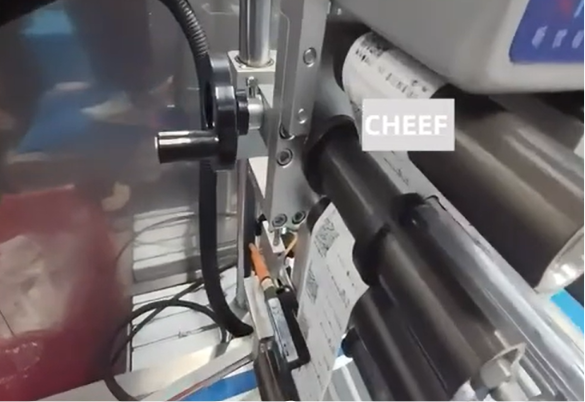
In highly dynamic packaging environments, traditional pre-printed labeling systems introduce significant manufacturing bottlenecks. Inventory management for dozens of varying product stock-keeping units (SKUs), label obsolescence due to sudden regulatory updates, and the inability to incorporate real-time traceability data (such as variable batch numbers, dynamic QR codes, and exact timestamps) compromise operational agility.
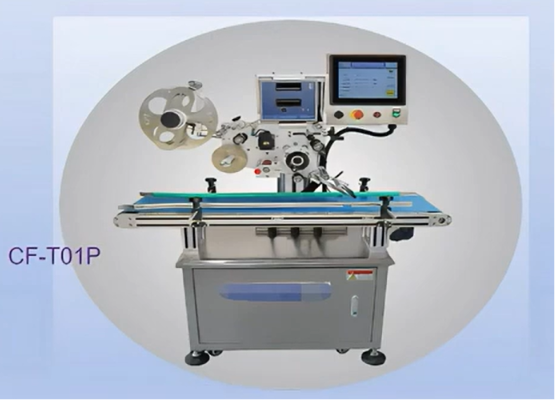
The CF-T01P Intelligent Online Print and Apply Labeling Machine eliminates these pain points by integrating high-resolution digital thermal transfer printing directly with a high-precision servo-driven label application head. This technical profile analyzes the electromechanical design, operational parameters, and system customization capabilities of the CF-T01P platform for modern packaging facilities.
Integrated System Engineering: Print-on-Demand Automation
The core engineering breakthrough of the CF-T01P is its ability to perform print-on-demand processing. Rather than using pre-printed stock, the machine prints dynamic data onto a blank or semi-blank label roll milliseconds before it is precisely applied to a moving substrate.
- Digital Thermal Transfer Core: The system is equipped with an integrated industrial thermal transfer overprinter (TTO). This digital engine works directly with the labeling automation software, processing real-time shifts in serialized data, regulatory text, nutritional tables, or barcodes without requiring physical plate changes.
- On-Demand Synchronization: As a product moves down the line, a photoelectric detection system establishes its tracking coordinate. The controller triggers the internal TTO engine to execute the print onto the ribbon-backed label material.
- Servo-Driven Application: Immediately after printing, the web moves across a precision steel peel blade. The backing paper is pulled over a sharp radius, releasing the leading edge of the adhesive label. A synchronized servo motor drives the feed roll, matching label distribution with conveyor line velocity to ensure an exact, ripple-free application.
Electromechanical Profiles and System Specifications
The CF-T01P is built using heavy-duty, industrial components optimized for multi-shift continuous production. The system relies on a standardized, low-consumption electrical framework and precise physical dimensions to allow direct integration into existing packaging lines:
- Electrical Framework: Operates on standard 220V AC power at 50/60 Hz, drawing a low operational power consumption of 650 Watts.
- Linear Web Velocity: The label drive head supports fully variable line speeds ranging from 0 to 45 meters per minute, allowing operators to match the exact output requirements of the primary packaging machine.
- Physical Placement Accuracy: Advanced servo-motor control algorithms keep application variances within a tight tolerance of plus or minus 1.0 mm.
- Scalable Print Footprints: To accommodate different amounts of data, the print head engine can be swapped to support three standard print footprints: 32mm x 75mm, 53mm x 75mm, and a wide-format 107mm x 75mm option.
- Label and Core Specifications: Built for industrial label rolls with a maximum outer diameter of 300 mm and a standard inner core diameter of 76 mm. It processes labels ranging from 10mm to 300mm in length and 10mm up to 150mm in height, requiring a standard 3mm gap between adjacent labels.
- Physical Dimensions: The compact main unit weighs approximately 70 kg, with a width profile of 650 mm and an operational height of 1510 mm.
Substrate Adaptation and Downstream Sorting Upgrades
The CF-T01P is engineered to process a wide variety of industrial packaging materials, provided they present a relatively flat surface profile. Typical target substrates include plastic pouches, unformed cardstock blanks, secondary shipping boxes, and rigid plastic food containers.
To accommodate different production layouts, the base machine can be integrated with several downstream and inline handling accessories via its central PLC network:
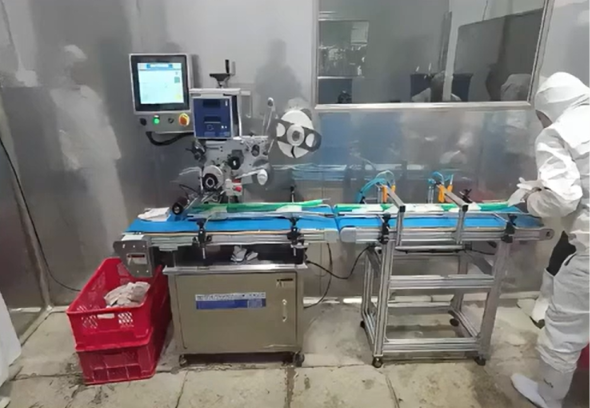
- Variable Conveyor Beds: The machine can be specified with three distinct conveyor lengths—1.2 meters, 1.5 meters, or 1.8 meters—with a standard width configuration of 260 mm.
- Multi-Row and Row-Shifting Modules: For lines processing multi-lane packaging arrays, motorized cross-axis rails can shift the print-and-apply head laterally across lanes.
- Product Diverter Systems: Connects directly with downstream vision inspection equipment to automatically sort or reject packages that fail quality control checks.
- Downstream Packaging Lines: Integrates with shrink tunnels and collection tables to automate secondary bundling right after label application.
Maintenance and Field Tuning Protocols
Maximizing the 10-to-15-year operational lifespan of the CF-T01P requires a routine, structured preventive maintenance schedule managed by the plant engineering team.
Operational Component Maintenance
- Thermal Print Element Cleaning: Ribbon dust and adhesive residue accumulate on the edge of the TTO head over time. Maintenance teams should wipe down the heating elements using lint-free swabs saturated with 99% electronic-grade isopropyl alcohol at every ribbon changeover to protect print quality and prevent element burnouts.
- Peel Plate and Roller Care: The sharp edge of the steel peel blade must remain smooth and free of adhesive buildup. If adhesive accumulates on the blade, the label web can hitch, causing backing paper snaps or minor placement delays that throw off the machine’s strict 1.0 mm tolerance.
Field Tuning and Calibration
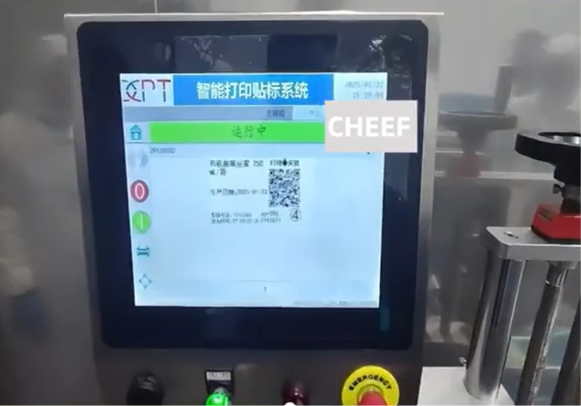
- Dynamic Speed Balancing: If labels are applied with wrinkles or structural bubbles, the labeling speed parameter on the touchscreen Human-Machine Interface (HMI) must be adjusted to match the conveyor bed’s linear velocity. A minor mismatch in speed can cause the label to stretch or bunch up during application.
- Variable Product Tuning: When changing lines from light plastic pouches to heavy corrugated cardboard cartons, the optical product detection sensors must be retuned. Adjusting the sensor’s electronic delay settings allows engineers to position the label precisely on the container regardless of its physical material or weight shifts.
System Advantages
- True On-Demand Printing: Eliminates the need to maintain an inventory of varied pre-printed label stocks by rendering real-time data onto blank media milliseconds before application.
- Precision Servo Control: Replaces older pneumatic cylinders with high-accuracy electrical servo systems, ensuring repeatable, tight placement tolerances down to plus or minus 1.0 mm.
- Scalable Data Windows: Offers multiple interchangeable print head configurations (32mm, 53mm, and 107mm) to handle anything from simple batch numbers to complex ingredient logs and shipping codes.
- Modular Integration: Supports direct software and mechanical pairing with variable-length conveyors, downstream diverters, automated row shifters, and product collection lines.
Frequently Asked Questions (FAQ)
Q1: What is the primary advantage of a servo-driven label application head over a traditional pneumatic cylinder?
Pneumatic systems rely on plant compressed air networks, which can experience pressure drops that lead to inconsistent stroke speeds and compromised placement accuracy. They also introduce risks from moisture and oil contamination. A servo-driven system uses precise electronic encoder data to control movement. This design ensures highly repeatable speeds, completely eliminates the need for plant compressed air, and maintains a tight plus or minus 1.0 mm placement tolerance even at high operational velocities.
Q2: Can the CF-T01P print and apply labels to surfaces that are slightly curved or uneven?
The CF-T01P is optimized for flat surfaces like boxes, bags, cartons, and trays. If a substrate has a minor surface variance, the output brush and weighted rubber rollers can flex to smooth the label down securely. However, for highly curved or round containers (like cylindrical bottles or jars), a dedicated wrap-around labeling assembly is required to prevent wrinkling and ensure complete label adhesion.
Q3: How does the system handle real-time changes to variable barcodes or text without pausing production?
The system’s internal controller features an advanced processor that communicates directly with your database via standard network protocols. When a print trigger is received, the processor generates the new barcode graphic or text string instantly in its memory and sends it directly to the digital thermal print head. This process occurs in milliseconds while the conveyor is moving, allowing full serialization and SKU changes without stopping the production line.
Q4: What causes the label backing paper to break repeatedly, and how can engineers resolve it?
Backing paper breakage is usually caused by excessive web tension or accumulated adhesive residue along the web path. Check the sharp edge of the steel peel blade and the guiding rollers for any sticky adhesive buildup that could cause friction drag. If the web path is clean, adjust the mechanical clutch tension or reduce the feed deceleration profile in the HMI software to ease the strain on the backing paper during high-speed indexing.
Watch the Full Video Tutorial:
This article summarizes the key points from our original video. Watching the full tutorial provides a clearer understanding of the procedures, demonstrations, and practical maintenance tips.
▶ Watch the full video below.
📺 Subscribe to the Cheef YouTube Channel to receive future maintenance guides, troubleshooting tutorials, product demonstrations, and industry updates.
