
Technical Profile of the CF-SXT01P Dual-Head Print and Apply Labeling System
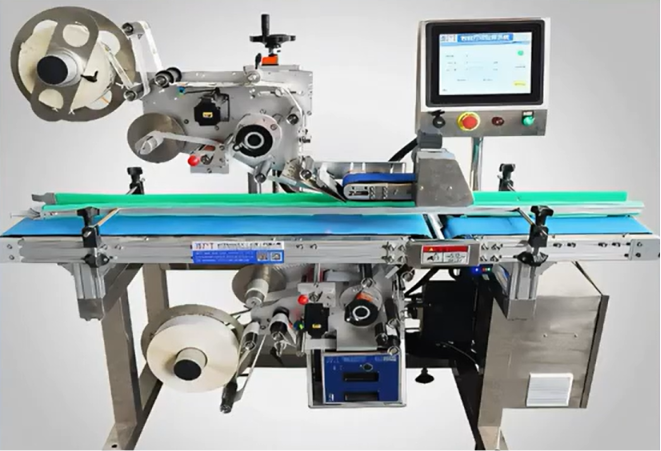
In high-volume automated logistics, food processing, and consumer goods packaging, products frequently require information applied to both the upper and lower surfaces of a single package. For instance, a food container may require a top brand label with a dynamic batch code, alongside a bottom nutrition panel featuring real-time weight tracking and tracking barcodes. Attempting this using two separate, sequential labeling stations increases conveyor footprints, doubles product handling, and introduces tracking errors between the top and bottom datasets.
The CF-SXT01P Intelligent Dual-Head Up and Down Printing and Labeling Machine addresses this by utilizing a synchronized dual-printhead architecture within a single, integrated conveyor workspace. This structural overview breaks down the mechanical, electrical, and operational engineering that allows the CF-SXT01P to provide high-speed, multi-surface print-and-apply automation.
Split-Conveyor Mechanical Architecture and Dual-Surface Access
The primary engineering challenge of applying a label to the underside of a moving product is maintaining continuous, stable material handling without blocking access to the bottom substrate. The CF-SXT01P solves this through a precision split-conveyor assembly.
[ Top Print & Apply Coder ]
│
▼
[ Infeed Conveyor ] ──> [ Gap / Split Zone ] ──> [ Outfeed Conveyor ]
▲
│
[ Bottom Print & Apply Coder ]
The Split-Conveyor Interface
The conveyor bed is divided into two distinct structural zones separated by a precise, calculated gap. As the product transitions from the infeed conveyor section to the outfeed section, its leading and trailing edges are supported by high-friction, synchronized belts.
Optical Gating and Simultaneous Application
During the brief moment when the product spans the gap between the conveyor beds, its underside is fully exposed to the lower labeling assembly. An optical sensor array tracks the product’s position in real time. The master controller then triggers both the upper and lower print-and-apply modules simultaneously, ensuring precise top and bottom label alignment in a single operational step.
Master System Control and Serialization Logic
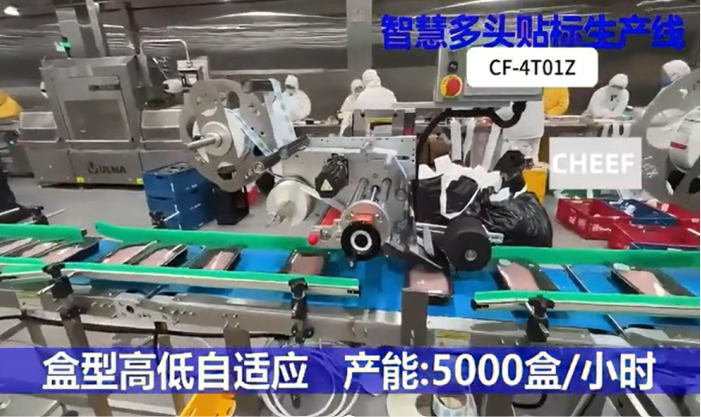
Operating two independent industrial thermal transfer print engines alongside twin servo-driven labeling heads within a single machine requires a robust electrical control architecture.
- Unified Processing Core: The CF-SXT01P is managed by a centralized high-speed PLC processor network. This master core acts as the single data hub for the entire system, eliminating the communication lag that often occurs when trying to link two separate standalone labeling machines.
- Synchronized Data Management: When a product breaks the tracking sensor’s light beam, the system pulls the required data from the production database. The PLC distributes this information to the top and bottom print heads simultaneously, ensuring that variable data—such as sequential serial numbers, real-time weights, or unique product barcodes—matches perfectly on both sides of the package.
- Servo Speed Calibration: Both labeling heads use independent, high-accuracy electrical servo motor drives. The master software continuously matches the linear dispensing speed of both heads with the velocity of the main split-conveyor bed, preventing the labels from pulling, wrinkling, or slipping.
Hardware Configuration and Technical Specifications
The CF-SXT01P platform features a heavy-duty, industrial-grade design optimized for continuous, multi-shift production environments:
- Electrical Infrastructure: Runs on standard industrial 220V AC power (50/60 Hz) with an efficient, low-consumption electrical layout.
- Placement Precision: Advanced servo tracking algorithms keep application tolerances within a tight plus or minus 1.0 mm window on both the upper and lower faces.
- Variable Production Speeds: Supports variable conveyor line speeds up to 45 meters per minute, allowing operators to match the throughput of upstream filling, sealing, or forming equipment.
- Modular Print Footprints: Both the top and bottom stations can be configured with interchangeable print head modules—supporting standard 32mm, 53mm, or wide-format 107mm print widths depending on label design needs.
- Industrial Media Capacity: Both labeling heads handle large label rolls with a maximum outer diameter of 300 mm mounted on standard 76 mm inner cores, minimizing roll changeover downtime.
Primary Industrial Use Cases and Material Flexibility
The dual-head up-and-down print-and-apply configuration provides unique production advantages across several key manufacturing and logistics sectors:
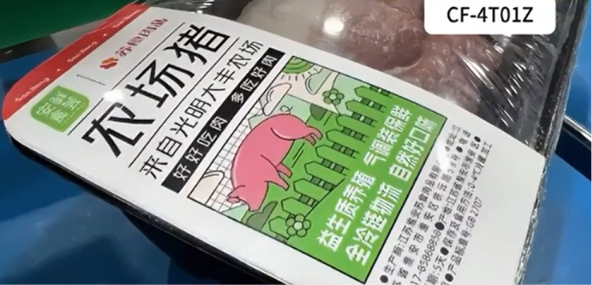
- Rigid Food Container Packaging: Perfect for ready-to-eat meals, fresh produce trays, and clamshell deli tubs. The top head applies brand graphics and packaging dates, while the bottom head prints detailed ingredients, nutritional panels, and product barcodes on the flat base of the container.
- Electronics and Component Packing: Used to label anti-static flat component cartons or memory module packages, applying consumer-facing marketing graphics to the top face and complex regulatory markings, serial numbers, and compliance codes to the bottom.
- E-Commerce and Logistics Distribution: Streamlines fulfillment operations by applying shipping routing info or customer invoices to one side of a flat mailer pouch or carton, while simultaneously adding tracking barcodes or inventory returns data to the reverse side.
Field Tuning, Calibration, and Preventive Maintenance
Because the CF-SXT01P relies on precise mechanical alignment across a split-conveyor gap, keeping the system running at peak OEE requires structured technical maintenance.
Maintenance Protocols
- Dual Print Head Cleaning: Ribbon dust and adhesive particles accumulate on both print heads. Maintenance teams should clean the thermal elements on both the upper and lower units using lint-free swabs and 99% electronic-grade isopropyl alcohol at every ribbon roll changeover to ensure crisp print quality and prevent element failure.
- Conveyor Gap Cleanliness: Because the lower print head sits directly beneath the conveyor gap, ensure the area is kept free from falling product debris, dust, or moisture. Weekly cleanings prevent optical sensor errors and avoid mechanical jams in the lower applicator assembly.
Technical Calibration and Troubleshooting
- Vertical Pressure Calibration: The top applicator uses weighted rollers or brushes to smooth down labels, while the lower unit relies on custom-angled brushes or air-assist mechanisms to secure the label against gravity. Operators must adjust these components to provide firm, even contact without causing drag that could twist or displace the product on the split-conveyor bed.
- Resolving Top-and-Bottom Data Mismatches: If the data on the top label doesn’t match the bottom label, check the sensor tracking queues in the HMI software. Resetting the tracking queue purges old data and ensures the processor pairs the correct datasets for every single package that crosses the conveyor gap.
System Advantages
- Single-Pass Multi-Surface Labeling: Processes both upper and lower label applications simultaneously, reducing machinery footprints and cutting product handling requirements in half.
- Paired Data Serialization: A centralized PLC network manages both print engines, ensuring tracking data, barcodes, and timestamps match perfectly on both sides of the package.
- High-Accuracy Servo Drives: Dual electronic servo systems maintain tight placement tolerances down to plus or minus 1.0 mm, eliminating the speed and pressure variations common with older pneumatic setups.
- Split-Conveyor Stability: High-friction, anti-static belt drives transport thin pouches, rigid trays, and flat cartons smoothly across the printing gap without losing position.
Frequently Asked Questions (FAQ)
Q1: What happens if a product is too short to span the gap in the split-conveyor bed?
The split-conveyor gap is engineered to match the minimum product length specified during system setup. For facilities processing wide varieties of package sizes, the conveyor beds can be built with an adjustable gap mechanism. This feature allows maintenance teams to manually narrow or widen the bridge zone using a precision adjustment dial, ensuring small items cross safely while still leaving enough room for the lower label applicator.
Q2: Can the lower labeling head operate on its own if we don’t need top labeling for a specific production run?
Yes. Both labeling heads can be controlled independently through the system’s touchscreen interface. If a specific production run only requires bottom markings, operators can simply turn off the top print head in the HMI software. The top head will remain inactive while the conveyor and bottom labeling assembly continue to run normally.
Q3: How does the lower applicator apply the label upward without it falling off due to gravity?
The lower labeling assembly is specifically engineered to overcome gravity during application. As the backing paper peels back over the blade, the leading edge of the adhesive label is supported by high-precision mechanical guides, custom-angled brushes, or a targeted air-assist stream. These elements hold the label in place until it makes contact with the bottom of the moving package, where pressure rollers smooth it down for secure adhesion.
Q4: Why are optical sensors so critical in a dual-head system, and how often do they require calibration?
Optical sensors track the exact entry and exit speeds of the product as it moves across the split conveyor. If these sensors become blocked by dust or debris, the system can lose track of the product’s position, leading to missing labels or misaligned prints. Sensors should be checked and wiped down with a clean, dry microfiber cloth at the start of every shift, and recalibrated through the HMI whenever switching between highly reflective plastic trays and matte cardboard surfaces.
Watch the Full Video Tutorial:
This article summarizes the key points from our original video. Watching the full tutorial provides a clearer understanding of the procedures, demonstrations, and practical maintenance tips.
▶ Watch the full video below.
📺 Subscribe to the Cheef YouTube Channel to receive future maintenance guides, troubleshooting tutorials, product demonstrations, and industry updates.
